Independent intelligence research at the edge

Small models.
Real work.

Capability shouldn't depend on a compute budget.

Most frontier AI assumes a datacenter behind it. We think there's another way.

We're an independent lab working on AI that runs at the edge. Most of our research starts from one question: how much can a model do when it has to fit on the device in front of you?

We design for constrained hardware from the start, choosing architecture, quantisation and distillation around where a model will run. That makes advanced AI practical for the teams, devices, and regions that large-scale infrastructure leaves out.

We're early. We share our work as results arrive.

Our mission

Build AI that performs at the edge, with capability driven by the quality of its design rather than the size of its compute budget.

Our vision

A future where the most useful models are the ones you can run yourself.

More from less.

Featured researchNeurIPS · ICRA (under review)

PRAXIS over Theoria

Corrective learning in place of scale for efficient manipulation.

A task-conditioned vision-action policy trained from scratch. No language model. No pretrained backbone. Robustness comes from the training signal, rather than the parameter count.

7.56Mtotal parameters
Model size
PRAXIS
7.56M
Nearest peer¹
~9×
Mean success · LIBERO
PRAXIS
0.831
Nearest peer¹
0.821
Vision encoder parameters
2.01M

¹ Nearest peer: 0.821 mean success. Results as reported in the paper.
01

Embodied intelligence

Control and perception policies that run on-device, for robots and machines that can't phone home for every decision. PRAXIS and SEAL are our first result in this direction.

First results · Accepted at NeurIPS
02

Compact representations

Our 2.01M-parameter vision encoder works without a pretrained backbone. We're developing it into a family of compact models for retrieval, perception, and understanding.

In progress

Tools for the hardware you already own.

Open source · Local agent

Promethean

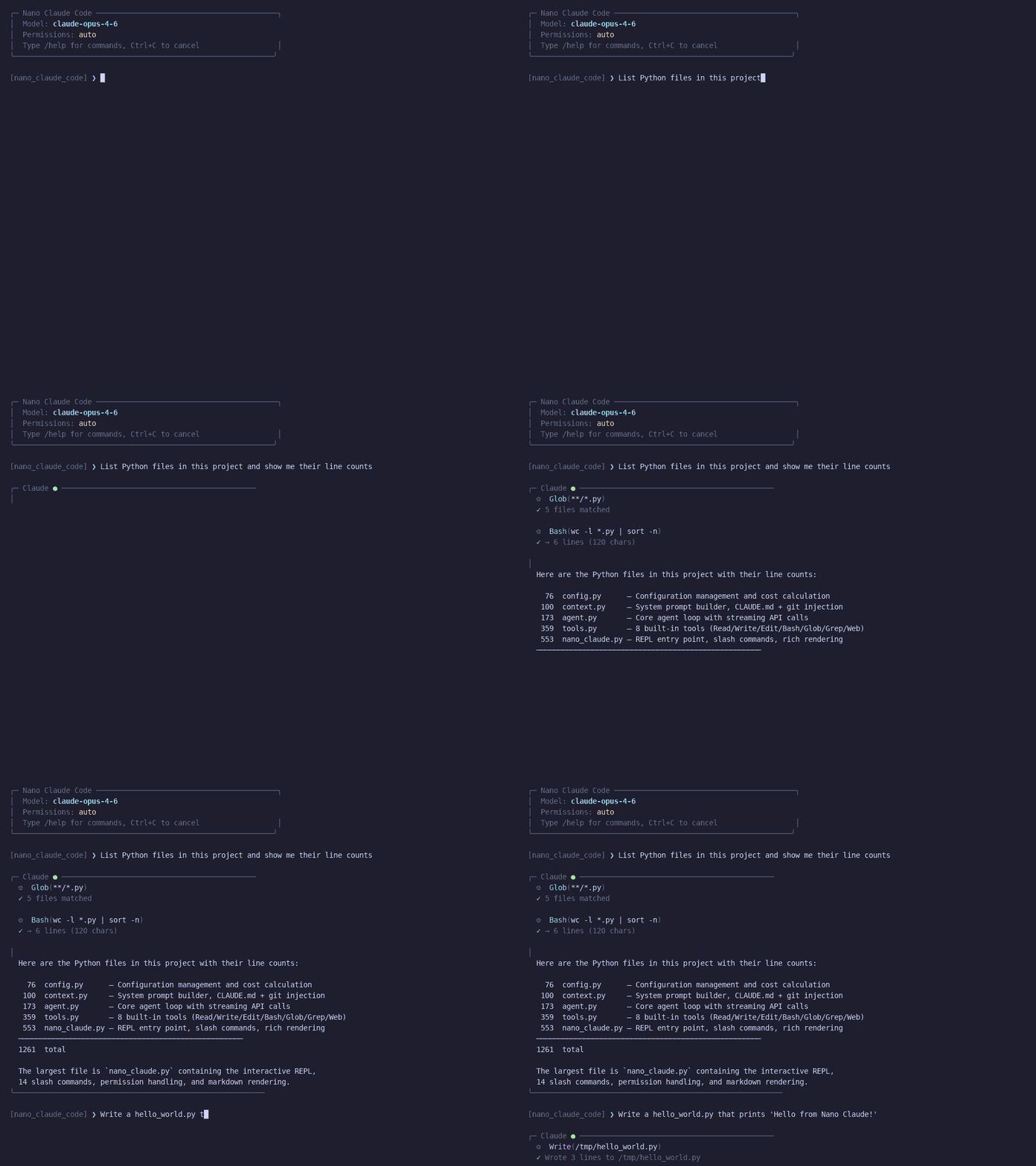
A full-stack coding and research agent for hardware you already own.

In its flagship mode it runs entirely on one 8 GB consumer GPU: no API keys, no metering, and no request leaves the machine. The same harness can also drive Ollama, LM Studio, or a cloud provider.

Context
224K
Local VRAM
8 GB
Tests
916

              
A Promethean session listing and counting Python files
A session from the Promethean repository: the agent finds files and runs shell tools.
Research · Decision model

OpenDecider

Calibrated, typed decisions from open LLMs. No text generation.

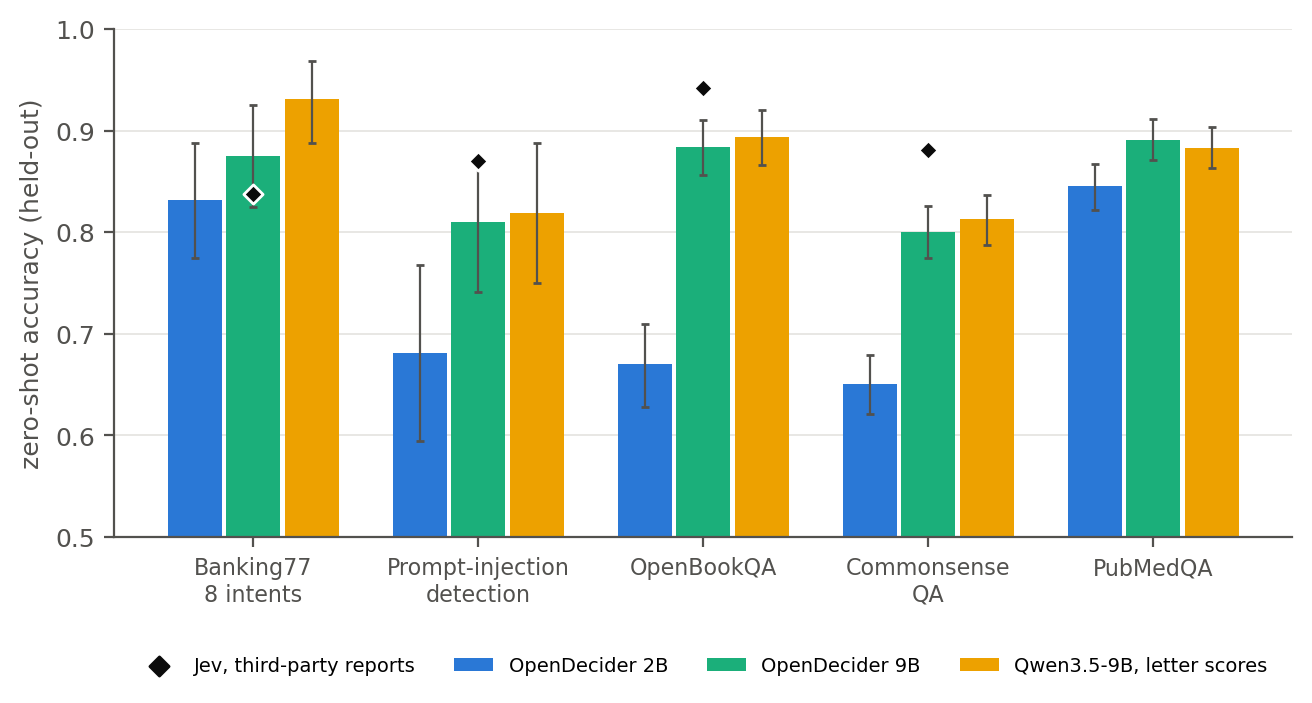
You send a state and a set of typed questions. It returns a calibrated probability for each option, plus the probability that none of them fits. It runs locally, down to a Jetson.

PubMedQA, zero-shot
0.891
Backbones
2B · 9B
Options per question
255
Zero-shot accuracy of OpenDecider on public benchmarks
Zero-shot accuracy on public benchmarks with real labels, with 95% intervals. No benchmark data was used in training.
Open source · Pre 1.0

Galley

Write together. Compile anywhere.

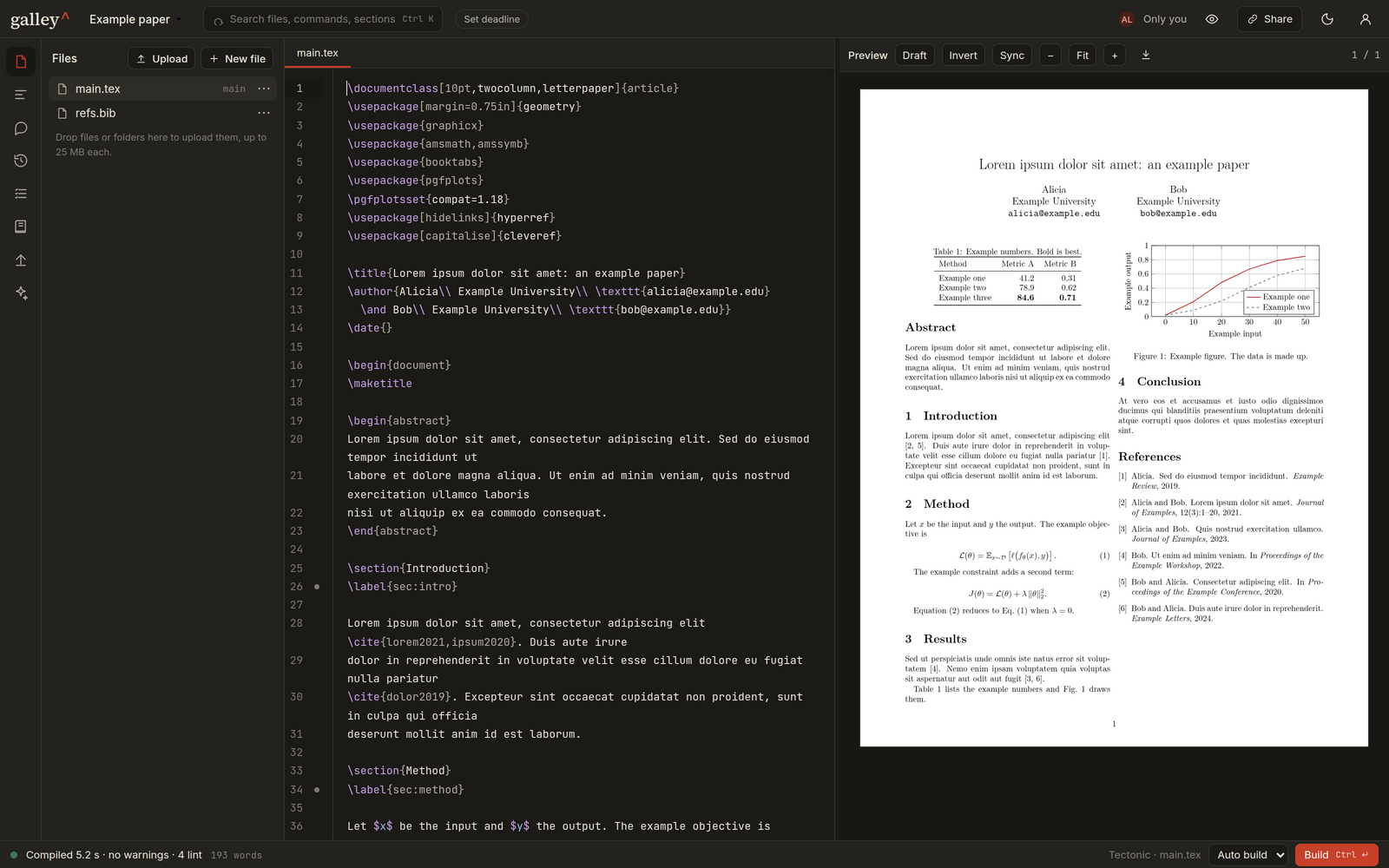
A self-hosted collaborative LaTeX editor in a single binary: live editing that keeps working offline, sandboxed builds, git-backed history, and a project-scoped MCP server for the AI client you already use.

Runtime
1 binary
Storage
SQLite + git
Agents
Diffs only
The Galley editor
The editor, with the compiled PDF beside it.
Research · Long context

Mercurius

Very long contexts for a small model, on modest hardware.

Mercurius rebuilds the memory-hungry attention of Qwen3.5-4B into a compact latent form, then distills it from a larger teacher. It reads a 1M-token context in about 5 GB instead of about 37 GB, and runs in llama.cpp.

KV cache
13.7× smaller
512K tokens, Jetson Orin
4.4 GB
Speed at 128K
15.6 tok/s

Built to be shared.

Talks, guides, and reference material from our own work. Free to take and adapt.

Technical guide45 slides · English

LLMs on your own corpus Open the guide

From the fundamentals to an assistant that works over your team's documents, code, and data. It covers retrieval, harnesses, local inference, fine-tuning, and verifiers, with a phased roadmap.

For
Research & engineering teams
Duration
One hour + reference appendix
Prerequisites
None

Print or save as PDF from inside the guide.

If it has to run on your device,
we should talk.

Send us a few lines about what you're building and the hardware it has to run on. We'll reach out.

contact@minervalabs.mx